Buy madonna.eu ?
We are moving the project
madonna.eu .
Are you interested in purchasing the domain
madonna.eu ?
domain@kv-gmbh.de · 0541-91531010
Buy madonna.eu ?
Is irony lying?
No, irony is not the same as lying. Irony involves saying or doing something that is the opposite of what is expected or intended, often for humor or to make a point. Lying, on the other hand, involves intentionally deceiving someone by saying something that is not true. While both irony and lying involve saying something that is not straightforward, the intention and context behind them are different. **
Is irony lies?
Irony is not lies. Irony is a literary or rhetorical device that involves using words to convey a meaning that is the opposite of its literal meaning. It is a form of expression that often involves humor or sarcasm. While irony may involve saying something that is not literally true, it is not the same as intentionally telling a falsehood or a lie. Instead, it is a way of conveying a deeper or alternative meaning. **


Similar search terms for Also known as irony about irony
Top-Angebote
Products related to Also known as irony about irony:
-
Klutz: Wild About HorsesLearn all the essentials of caring, loving, and riding horses-with your very own model horse. From what they eat to how they sleep, the photo-filled book covers everything a budding horse-lover wants to know about their favorite animal. Then, test...24,99 $*Shipping: 0,00 $Secure redirect to the provider
-
Routledge All About Autism: A Practical Guide for Secondary Teachers (All About SEND)All About Autism is an accessible and informative guide for secondary school teachers, designed to increase their knowledge and understanding of autism and enhance their toolkit with practical, adaptable strategies to support autistic learners in their care. The book initially explores key traits and terminology, debunks myths and misconceptions, and shines a light on the strengths and abilities of autistic learners. It then introduces readers to a range of easy-to-implement ideas for practice and concrete solutions to provide further support, all with the child at the heart. All About Autism includes: Practical strategies tailored to the secondary key stages with current research broken down into easily digestible chunks A focus on adaptive teaching and how to implement key strategies in different subject areas Guidance on a range of topics, from supporting students with mental health and anxiety to managing group work, class work, writing difficulties, homework and exams Strategies to support an understanding of puberty, relationships and sex education Approaches to foster autistic pride and to promote positive attitudes to diversity in all its forms Easy to dip in and out of chapters with signposting to further research, resources and support Taking a celebratory approach, the guide focuses on difference rather than deficit and weaves together the voices of autistic learners and parents alongside practical examples of what high-quality and adapted teaching should look like. It will be essential reading for all secondary school educators, SENCOs and parents who are supporting autistic learners aged 11-16.10,99 £*Shipping: 2,99 £Secure redirect to the provider
-
Workman Steal Like An Artist: 10 Things Nobody Told You About Being Creative By Austin KleonArtist Austin Kleon's beautifully illustrated bestseller teaches readers how to use their surroundings and their own creativity to discover their own artistic paths. Filled with clever infographics and words of wisdom from Kleon, and peppered with quotes from other successful artists, Steal Like an Artist, is an inspiration for both veteran and aspiring artists everywhere. Unlock your creativity. An inspiring guide to creativity in the digital age, Steal Like an Artist presents ten transformative principles that will help readers discover their artistic side and build a more creative life. Nothing is original, so embrace influence, school yourself through the work of others, remix and reimagine to discover your own path. Follow interests wherever they take you-what feels like a hobby may turn into you life's work. Forget the old cliché about writing what you know: Instead, write the book you want to read, make the movie you want to watch. And finally, stay Smart, stay out of debt, and risk being boring in the everyday world so that you have the space to be wild and daring in your imagination and your work.7,99 £*Shipping: 2,99 £Secure redirect to the provider
-
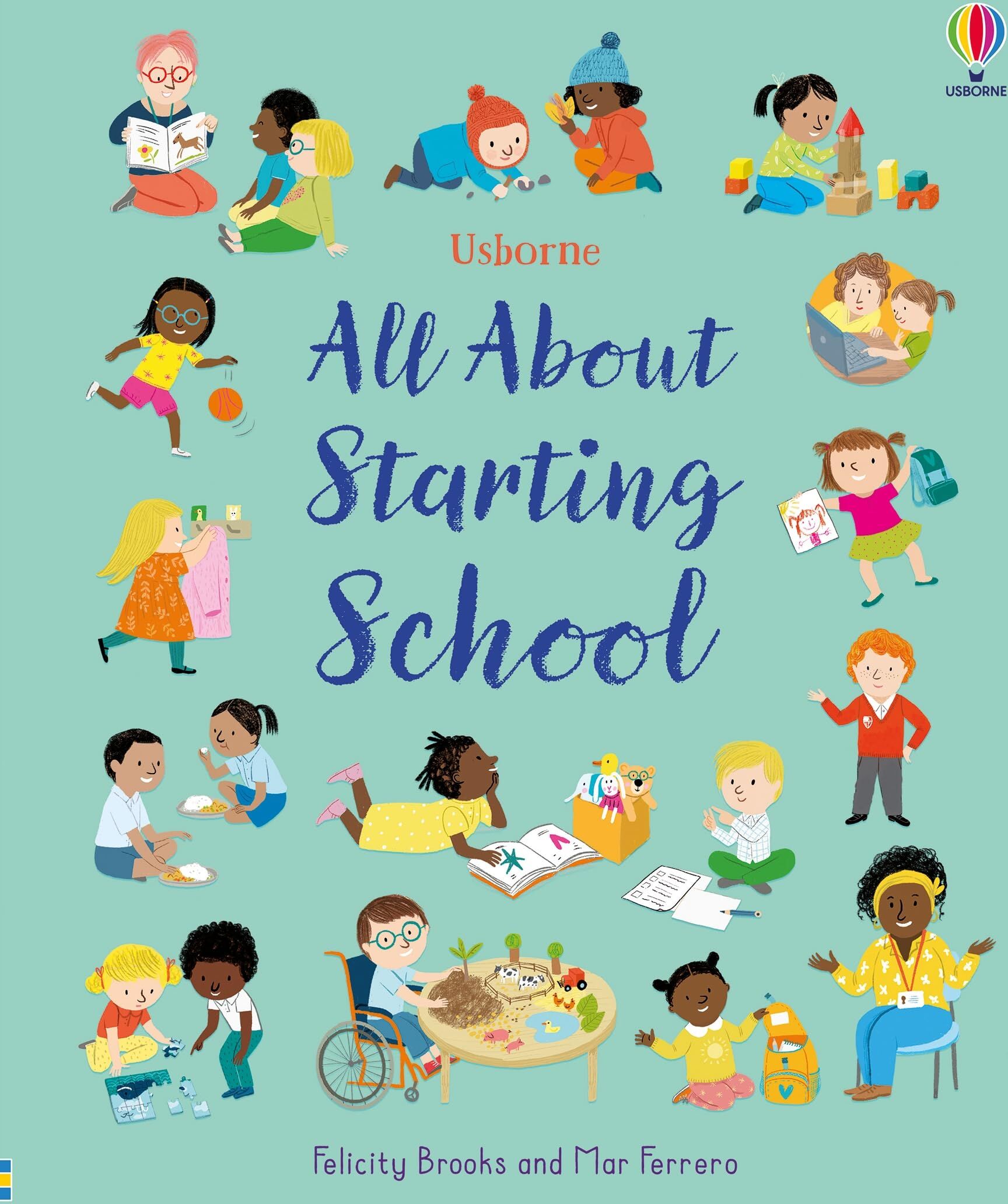
Usborne Publishing Ltd All About Starting School by Felicity Brooks (Usborne All About series)What is a school? Why do we have to go there? How will we get there? What do we need to take? Who will we meet and what will we do when we are there? These and many more questions are answered in this engaging and reassuring introduction to schools of all kinds. Children can find out about who works in a school, what happens during the school day and get tips on how to make friends. - Includes Quicklinks for further information and useful notes for grown-ups on helping prepare children for the big day. - Help build essential vocabulary - Encourages conversation about starting school - Supports early years curriculum Chapters in this book include: - What is school? - Why do you need to go to school? - Getting ready for school - Getting to school - What's in a classroom? - Who works at a school? - What will you do at school? - What else happens at school? - Lunchtime at school - Making friends - Going on a school trip - Different kinds of schools - How do you feel about school? - Some useful school words5,99 £*Shipping: 2,99 £Secure redirect to the provider



-
Why is irony important?
Irony is important because it adds depth and complexity to communication by creating layers of meaning. It can be used to convey sarcasm, humor, or criticism in a subtle way. Irony challenges the reader or listener to think more deeply about the message being conveyed and can lead to a greater understanding of the underlying themes or issues being discussed. Ultimately, irony can help to engage the audience and make the message more memorable. **
-
"Is self-irony abnormal?"
Self-irony is not abnormal; in fact, it is a common and healthy trait. Being able to laugh at oneself and not take oneself too seriously can be a sign of humility and self-awareness. It can also be a way to cope with difficult situations and show resilience. As long as it is not taken to an extreme or used as a way to mask deeper insecurities, self-irony is a normal and even beneficial aspect of human behavior. **
-
What is their irony?
The irony in the situation is that the person or characters involved are experiencing the opposite of what they expected or intended. This can create a sense of humor or surprise for the audience, as the outcome is unexpected. Irony can also be used to highlight contradictions, hypocrisy, or absurdity in a situation. It often adds depth and complexity to a story or situation, making it more thought-provoking for the audience. **
-
Why do people write not only irony but also "irony off" under a post? What does "off" mean?
People write "irony off" under a post to indicate that they are not being ironic and are being serious. The use of "off" in this context means to turn off or disengage from the irony, indicating a shift to a more sincere or straightforward communication style. This can be helpful in online communication where irony can be easily misunderstood, allowing the writer to clarify their intended meaning. **


What is a meta-irony?
Meta-irony refers to a situation where irony is used to comment on or highlight the irony within the original ironic statement or situation. It involves a layer of irony on top of another layer of irony, creating a more complex and self-aware form of humor or commentary. This can add depth and complexity to the original ironic statement, often requiring the audience to think more critically about the intended message. Overall, meta-irony plays with the concept of irony itself, using it in a self-referential and reflective way. **
Is it irony or insult?
It can be difficult to determine whether a statement is intended as irony or insult without understanding the context and the speaker's tone and intention. Irony is a literary device used to convey the opposite of what is expected, often for humorous or satirical effect. On the other hand, an insult is a disrespectful or offensive remark intended to hurt or offend someone. It's important to consider the context and the relationship between the speaker and the listener to determine whether a statement is meant as irony or insult. **
Top-Angebote
Products related to Also known as irony about irony:
-
PetsAreLife Mess Free & Painless Dog Nail Clipper Also For Cats Mess Free & Painless Dog Nail Clipper Also For CatsTransform your pet grooming routine with ease and comfort by using this revolutionary pet nail grinder. Traditional nail clipping is often a stressful and unpleasant task for both you and your furry friend, but our grinder provides a safe, hurtfree...23,97 $*Shipping: 0,00 $Secure redirect to the provider
-
Klutz: Wild About HorsesLearn all the essentials of caring, loving, and riding horses-with your very own model horse. From what they eat to how they sleep, the photo-filled book covers everything a budding horse-lover wants to know about their favorite animal. Then, test...24,99 $*Shipping: 0,00 $Secure redirect to the provider
-
Routledge All About Autism: A Practical Guide for Secondary Teachers (All About SEND)All About Autism is an accessible and informative guide for secondary school teachers, designed to increase their knowledge and understanding of autism and enhance their toolkit with practical, adaptable strategies to support autistic learners in their care. The book initially explores key traits and terminology, debunks myths and misconceptions, and shines a light on the strengths and abilities of autistic learners. It then introduces readers to a range of easy-to-implement ideas for practice and concrete solutions to provide further support, all with the child at the heart. All About Autism includes: Practical strategies tailored to the secondary key stages with current research broken down into easily digestible chunks A focus on adaptive teaching and how to implement key strategies in different subject areas Guidance on a range of topics, from supporting students with mental health and anxiety to managing group work, class work, writing difficulties, homework and exams Strategies to support an understanding of puberty, relationships and sex education Approaches to foster autistic pride and to promote positive attitudes to diversity in all its forms Easy to dip in and out of chapters with signposting to further research, resources and support Taking a celebratory approach, the guide focuses on difference rather than deficit and weaves together the voices of autistic learners and parents alongside practical examples of what high-quality and adapted teaching should look like. It will be essential reading for all secondary school educators, SENCOs and parents who are supporting autistic learners aged 11-16.10,99 £*Shipping: 2,99 £Secure redirect to the provider
-
Is irony lying?
No, irony is not the same as lying. Irony involves saying or doing something that is the opposite of what is expected or intended, often for humor or to make a point. Lying, on the other hand, involves intentionally deceiving someone by saying something that is not true. While both irony and lying involve saying something that is not straightforward, the intention and context behind them are different. **
-
Is irony lies?
Irony is not lies. Irony is a literary or rhetorical device that involves using words to convey a meaning that is the opposite of its literal meaning. It is a form of expression that often involves humor or sarcasm. While irony may involve saying something that is not literally true, it is not the same as intentionally telling a falsehood or a lie. Instead, it is a way of conveying a deeper or alternative meaning. **
-
Why is irony important?
Irony is important because it adds depth and complexity to communication by creating layers of meaning. It can be used to convey sarcasm, humor, or criticism in a subtle way. Irony challenges the reader or listener to think more deeply about the message being conveyed and can lead to a greater understanding of the underlying themes or issues being discussed. Ultimately, irony can help to engage the audience and make the message more memorable. **
-
"Is self-irony abnormal?"
Self-irony is not abnormal; in fact, it is a common and healthy trait. Being able to laugh at oneself and not take oneself too seriously can be a sign of humility and self-awareness. It can also be a way to cope with difficult situations and show resilience. As long as it is not taken to an extreme or used as a way to mask deeper insecurities, self-irony is a normal and even beneficial aspect of human behavior. **
Similar search terms for Also known as irony about irony
-
Workman Steal Like An Artist: 10 Things Nobody Told You About Being Creative By Austin KleonArtist Austin Kleon's beautifully illustrated bestseller teaches readers how to use their surroundings and their own creativity to discover their own artistic paths. Filled with clever infographics and words of wisdom from Kleon, and peppered with quotes from other successful artists, Steal Like an Artist, is an inspiration for both veteran and aspiring artists everywhere. Unlock your creativity. An inspiring guide to creativity in the digital age, Steal Like an Artist presents ten transformative principles that will help readers discover their artistic side and build a more creative life. Nothing is original, so embrace influence, school yourself through the work of others, remix and reimagine to discover your own path. Follow interests wherever they take you-what feels like a hobby may turn into you life's work. Forget the old cliché about writing what you know: Instead, write the book you want to read, make the movie you want to watch. And finally, stay Smart, stay out of debt, and risk being boring in the everyday world so that you have the space to be wild and daring in your imagination and your work.7,99 £*Shipping: 2,99 £Secure redirect to the provider
-
Usborne Publishing Ltd All About Starting School by Felicity Brooks (Usborne All About series)What is a school? Why do we have to go there? How will we get there? What do we need to take? Who will we meet and what will we do when we are there? These and many more questions are answered in this engaging and reassuring introduction to schools of all kinds. Children can find out about who works in a school, what happens during the school day and get tips on how to make friends. - Includes Quicklinks for further information and useful notes for grown-ups on helping prepare children for the big day. - Help build essential vocabulary - Encourages conversation about starting school - Supports early years curriculum Chapters in this book include: - What is school? - Why do you need to go to school? - Getting ready for school - Getting to school - What's in a classroom? - Who works at a school? - What will you do at school? - What else happens at school? - Lunchtime at school - Making friends - Going on a school trip - Different kinds of schools - How do you feel about school? - Some useful school words5,99 £*Shipping: 2,99 £Secure redirect to the provider
-
Learn About Animals Value PackWhether it is a group of wild mammals, birds, or even insects, there is a unique name to identify each specific animal group. Groups of bees, butterflies, rabbits, and dogs are the stars of this vibrant new set of LEARN ABOUT books that are packed...23,76 $*Shipping: 0,00 $Secure redirect to the provider
-
Learn About: Fall Value PackFall is here and so are colorful leaves, delicious apples, orange pumpkins, and lots of celebrations! With this new series, dive into the icons that make fall so much fun. Why do we harvest apples in fall? How does a pumpkin grow? Why do leaves...23,99 $*Shipping: 0,00 $Secure redirect to the provider
-
What is their irony?
The irony in the situation is that the person or characters involved are experiencing the opposite of what they expected or intended. This can create a sense of humor or surprise for the audience, as the outcome is unexpected. Irony can also be used to highlight contradictions, hypocrisy, or absurdity in a situation. It often adds depth and complexity to a story or situation, making it more thought-provoking for the audience. **
-
Why do people write not only irony but also "irony off" under a post? What does "off" mean?
People write "irony off" under a post to indicate that they are not being ironic and are being serious. The use of "off" in this context means to turn off or disengage from the irony, indicating a shift to a more sincere or straightforward communication style. This can be helpful in online communication where irony can be easily misunderstood, allowing the writer to clarify their intended meaning. **
-
What is a meta-irony?
Meta-irony refers to a situation where irony is used to comment on or highlight the irony within the original ironic statement or situation. It involves a layer of irony on top of another layer of irony, creating a more complex and self-aware form of humor or commentary. This can add depth and complexity to the original ironic statement, often requiring the audience to think more critically about the intended message. Overall, meta-irony plays with the concept of irony itself, using it in a self-referential and reflective way. **
-
Is it irony or insult?
It can be difficult to determine whether a statement is intended as irony or insult without understanding the context and the speaker's tone and intention. Irony is a literary device used to convey the opposite of what is expected, often for humorous or satirical effect. On the other hand, an insult is a disrespectful or offensive remark intended to hurt or offend someone. It's important to consider the context and the relationship between the speaker and the listener to determine whether a statement is meant as irony or insult. **
* All prices are inclusive of VAT and, if applicable, plus shipping costs. The offer information is based on the details provided by the respective shop and is updated through automated processes. Real-time updates do not occur, so deviations can occur in individual cases. ** Note: Parts of this content were created by AI.